
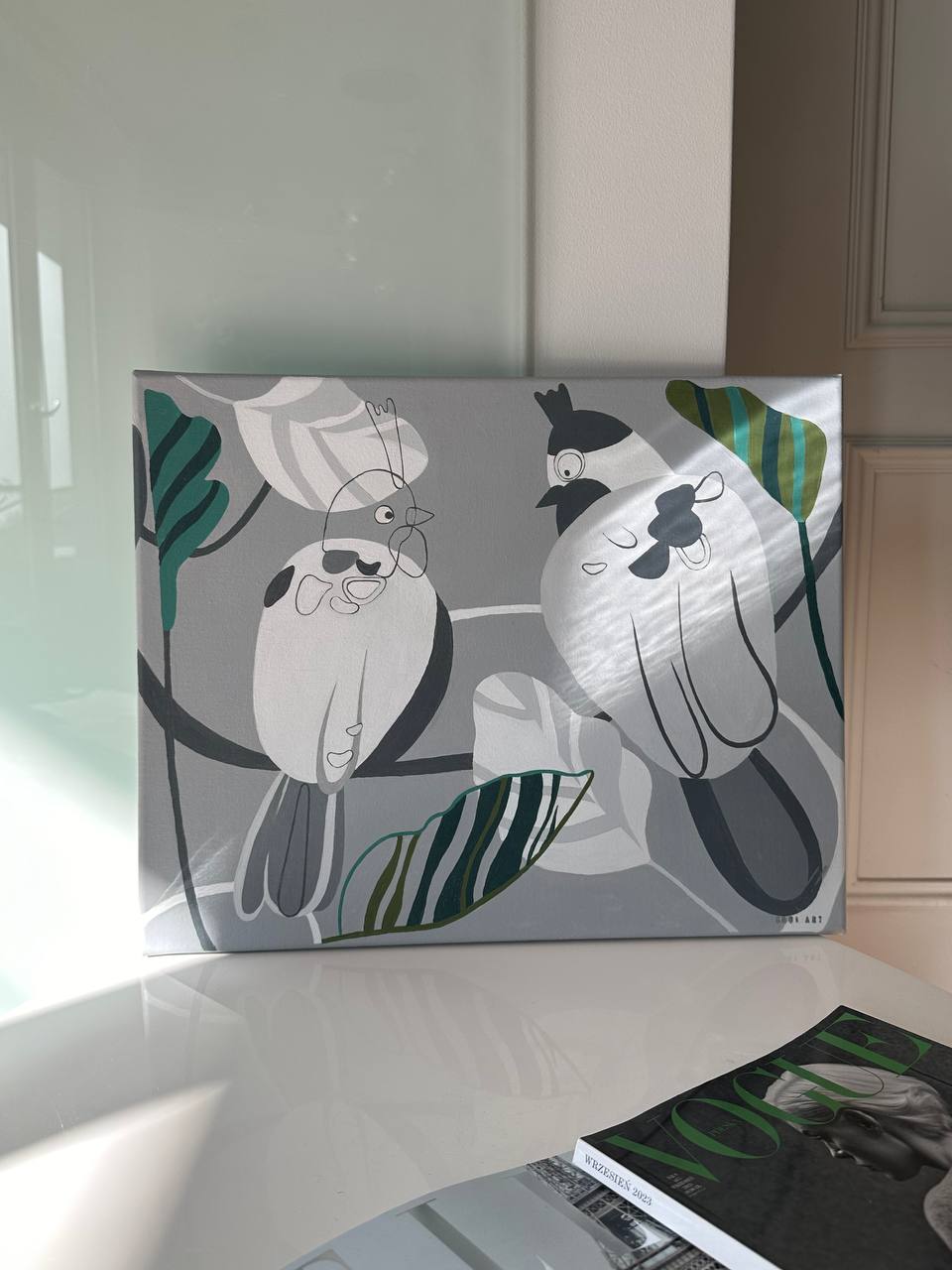
What makes a painting "work"?
Sometimes it's the colour, sometimes the subject, but most often — the composition.
Composition in painting isn't just about where objects sit on the canvas. It's the entire arrangement of elements — shapes, lines, colours, light, shadow, and empty space — that creates harmony or tension. Thanks to it, a painting can feel static or dynamic, tell a story, or freeze a single moment in place.
It's composition that guides the viewer's eye, deciding what they'll notice first, and what they'll only pick up on a moment later.
For a long time I thought I was simply "lucky" — that I had a natural feel for composition. That it was a gift you either have or you don't. But today I know that's not how it works. I probably do have some innate tendency for it, but a large part of it comes from looking at an enormous number of works and drawing hundreds of pictures, until the skill becomes second nature.
The lessons that shaped me
From the age of 12, I had a teacher who would sit us in a circle, take a book of reproductions of famous paintings, and talk about each one specifically in terms of composition. Then she'd give us assignments: draw an umbrella, a nest, a bird — and place it on the page according to the rules of composition.
We'd start with a small sketch, then transfer it to bigger paper and finish it in black ink. I loved it!
I don't know if there's some deep point to this. I just wanted to show you — my three readers 😄 — a little of what the world of drawing and painting looks like from the inside. Maybe it'll inspire someone, maybe it'll be useful to someone. Or maybe it'll just be a nice bit of trivia for today.
Comments
No comments yet. Be the first!